Aquatic Sciences Club Creek Cleanups At Tanyard Creek
Allison Jones | April 2026
Since its founding in the spring of 2024, the Georgia College Aquatic Sciences Club has worked to combine student interests in aquatic sciences with hands-on research, community outreach, and environmental service. As an extension of the Georgia College Aquatic Sciences Center, the club focuses on both local and statewide aquatic research while also working to improve water quality in the Milledgeville community. One of the club’s largest ongoing initiatives has been its creek cleanup efforts along Tanyard Creek.
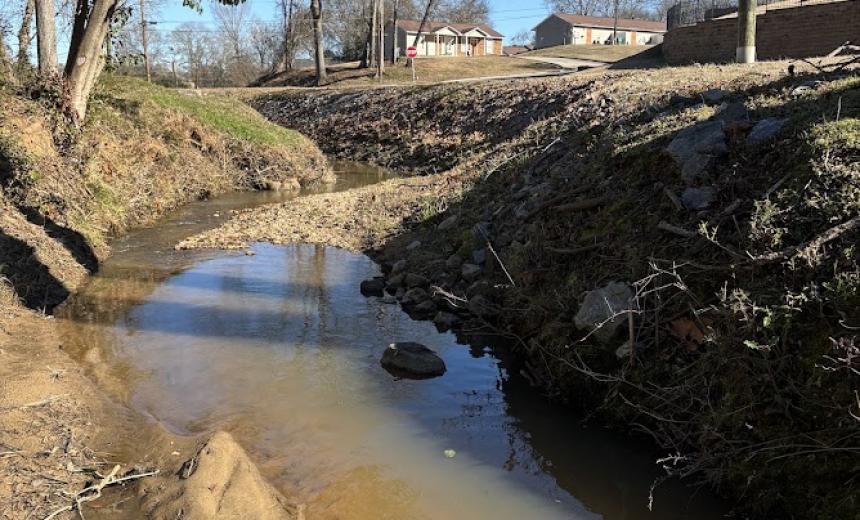
Tanyard Creek, located near GCSU’s campus, has been the focus of student research for many years due to its exposure to urban runoff. Research conducted by students, along with water monitoring from Academic Outreach, has shown that the creek often contains elevated levels of nitrate and phosphate. These pollutants are believed to come from runoff in the surrounding urban area and can negatively impact water quality and aquatic ecosystems.
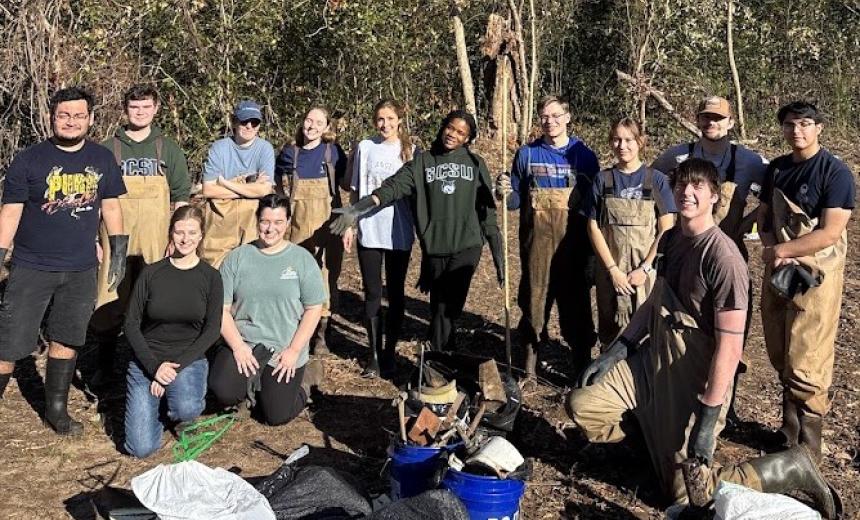
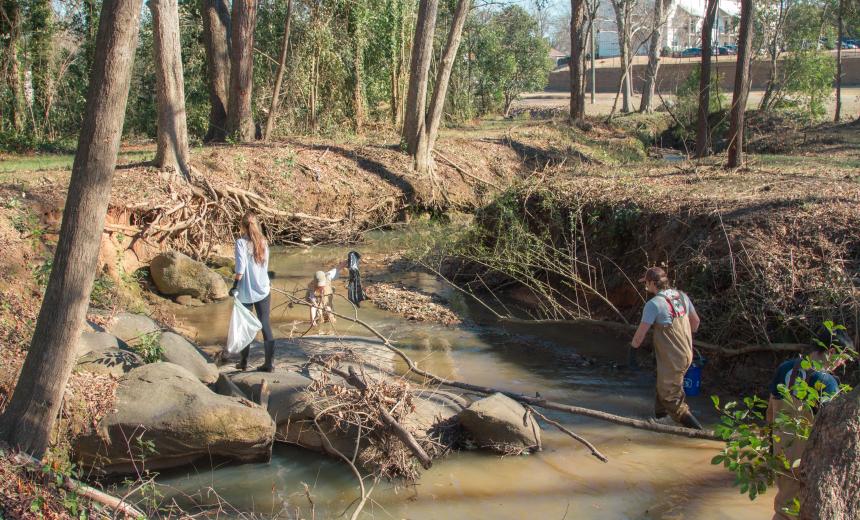
To help address these issues, the Aquatic Sciences Club organizes creek cleanup events aimed at improving both the aesthetics and health of the creek. The cleanups began in the section of the creek surrounded by College Station Apartments and have continued since the start of the club. Over time, members have seen noticeable improvements in the amount of trash found in that portion of the creek, allowing the club to expand its cleanup efforts farther upstream.
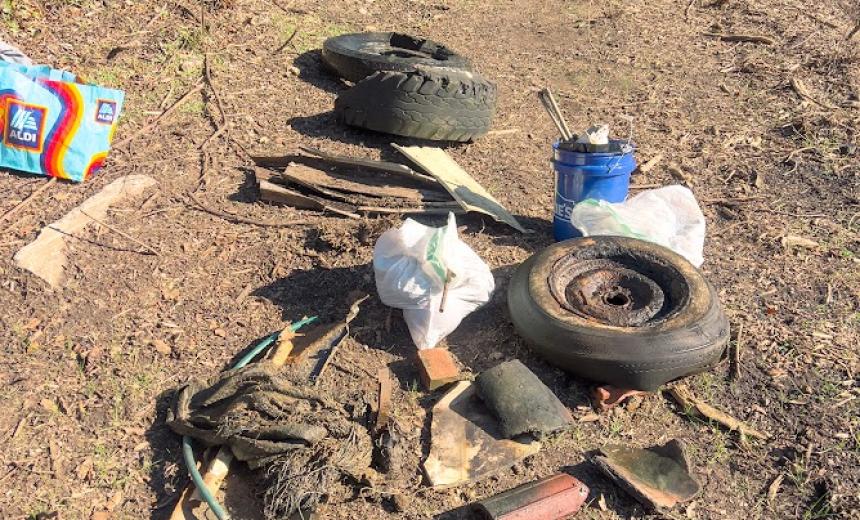
During cleanup events, students remove a wide range of trash and debris from the creek. Common items include tires, cigarettes, vapes, styrofoam, food and drink packaging, and large amounts of glass. Volunteers have also recovered larger discarded items such as mattresses, shopping carts, building materials, and car parts.
In addition to improving the creek itself, the cleanups have also increased student involvement and community awareness. Over the last year, participation in the events has continued to grow, with students from many areas of GCSU, volunteering their time and earning service hours while contributing to the ASC’s mission. The club hopes these events not only improve the local waterway, but also educate participants about how waste enters streams and impacts surrounding ecosystems.
Looking ahead, the Aquatic Sciences Club plans to continue expanding its cleanup efforts while incorporating more educational outreach into future events. The club hopes to provide brochures, signs, and informational materials to community members near the creek in order to reduce future dumping and increase awareness about water quality issues. By combining research, service, and education, the club continues to make a positive impact on both Tanyard Creek and the Milledgeville community.
Students and Staff Conduct Research on Water Composition at Lake Oconee and Lake Sinclair
Allison Jones & Camille Tobey | March 2026
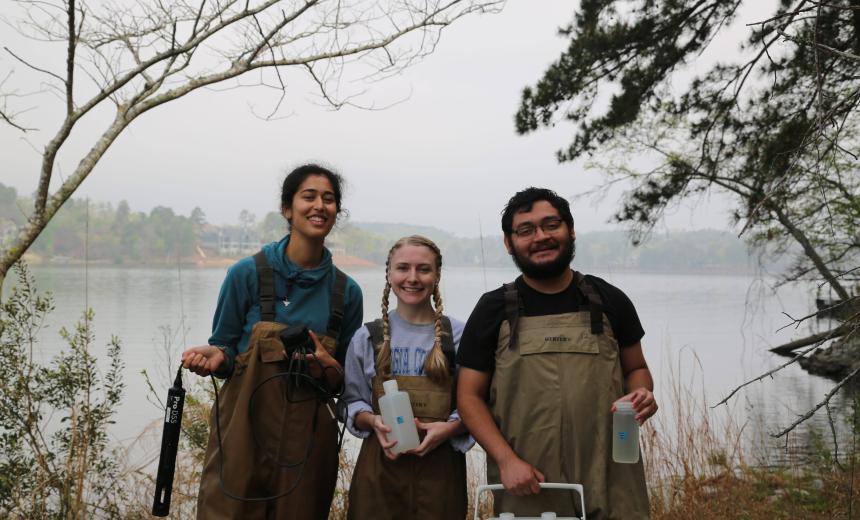
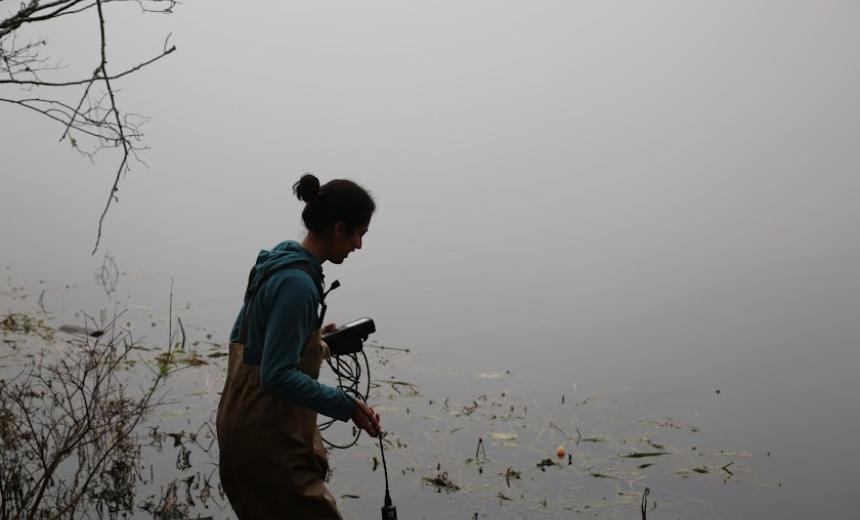
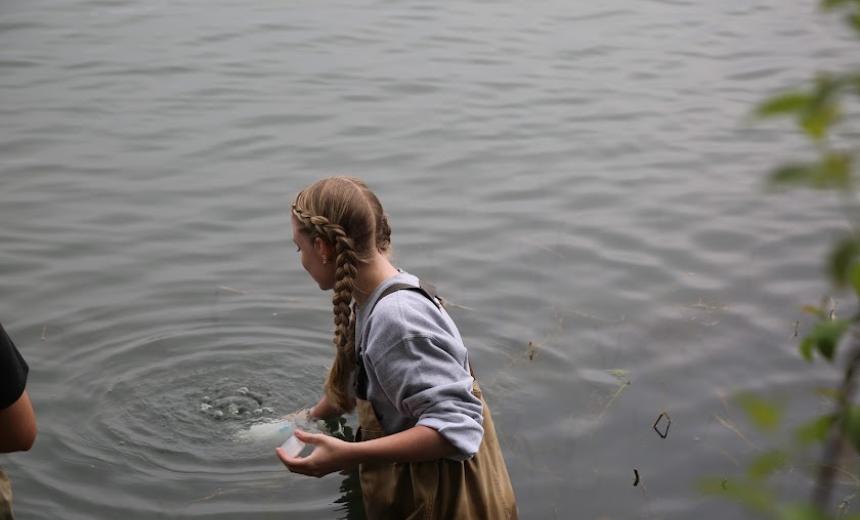
On March 26th, students and staff from Georgia Colleges Aquatic Sciences Center went to three different sites around both Lake Oconee and Lake Sinclair to conduct their monthly research on water composition. At each site, the students collected water samples and recorded key environmental data from three different locations to better understand the water quality of each lake. At every stop, the students followed a consistent sample collection process. First, they carefully labeled each set of three bottles to correspond with what specific site and location they were collecting from. Next, they rinsed each bottle three times with lake water to prevent contamination from previous lab tests. Finally, they collected their samples, making sure to avoid areas in the lake with high sediment levels, as an excess of sediment could skew the results. After collecting their water samples, they also took various measurements with a YSI console. This tool measures water quality indicators such as water temperature, pressure, dissolved oxygen, conductivity, pH level, and turbidity of the water.
The research team is also studying algal blooms and investigating what causes different levels of algae in the lakes, as well as whether blooms can be prevented or predicted. Another focus of the study is the winter drawdown of Lake Sinclair, when water levels are lowered by approximately two meters to allow the lake residents to repair their docks. Researchers are comparing the drawdown lake with non-drawdown conditions to determine whether the lowered water levels had any effect on the overall lake health and water quality.
The overall goal of the research is to establish a baseline for water quality in Lake Oconee and Lake Sinclair. By creating a record of water conditions, researchers will be better prepared to identify changes caused by invasive species or future environmental issues. The project reflects an ongoing commitment to monitoring and preserving the quality of Lake Oconee and Lake Sinclair while also preparing Georgia College students for future work in
aquatic science. Students participating in the research included Anya, an ASC research assistant; Hasari, a graduate assistant; and Michelle, an undergraduate independent studies student.
Environmental Science Students Gain Hands-On Research Experience
Allison Jones | March 2026
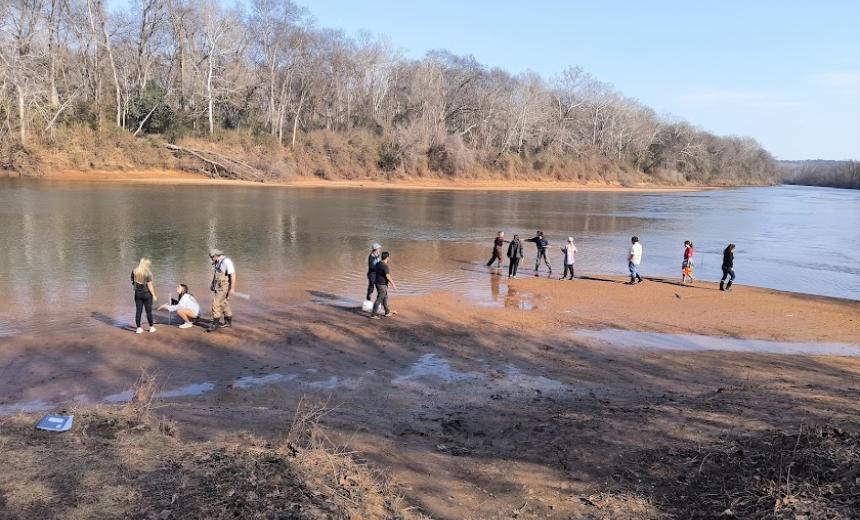
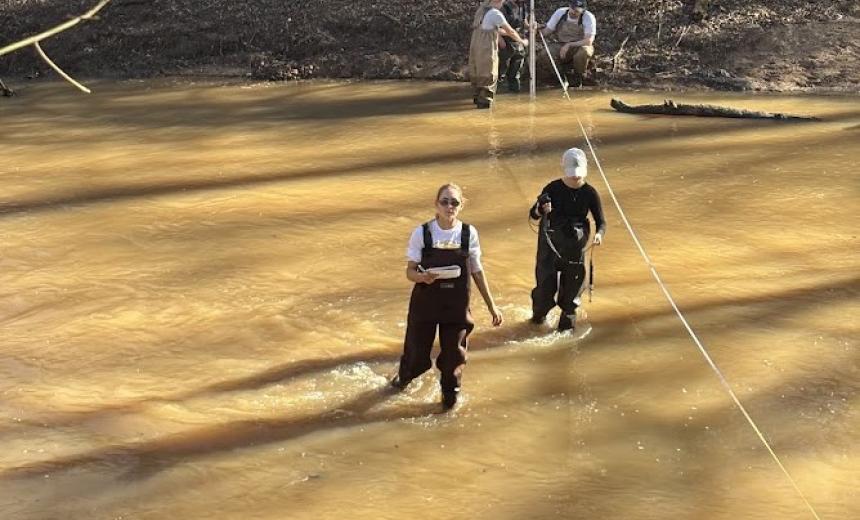
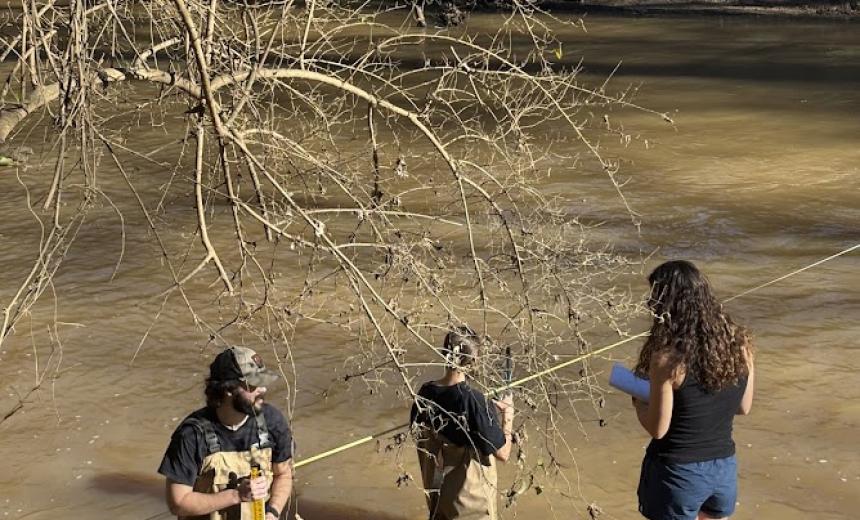
Students from Dr. VandeVoorts' Methods in Aquatic Research Lab have spent the semester working closely with the Aquatic Sciences Center, gaining hands-on experience. During a recent field lab at the Greenway, Aquatic Sciences Center Director, Dr. Mutiti guided students through data collection and provided specialized hydrology equipment to support their research. Working along the Oconee River and Fishing Creek, students in the course are studying water quality and stream discharge, comparing how conditions change across locations. Recent rainfall and a dam release created water levels that were higher than normal, meaning the group needed to adjust their sampling plans, which was an experience that mirrored real professional fieldwork.
"We are working on assessing surface water quality and stream discharge, and seeing how that changes across time and place," said Professor Allison VandeVoort. "With field work, it's really common to have to make changes. This was actually a really good experience for students, since they will have to deal with things like this in professional settings." Despite the challenges, students collected data using tools like YSI probes and velocimeters, measuring PH, dissolved oxygen, and stream velocity to better understand differences between sites.
"It's interesting because conditions aren't always ideal, but we're making the best Of it," said senior environmental science student, Isaac Dewsbury. "A lot of what we're doing right now is going to translate into our own research." Back in the lab, students will analyze their data to compare water quality across sites, which is work that ultimately reflects a bigger impact. Monitoring water quality not only helps understand local ecosystems, but also supports public health, safe drinking water, and environmental protection in surrounding communities.
Research Team from Georgia College Explores Coastal Ecosystems at Sapelo Island
Allison Jones | February 2026
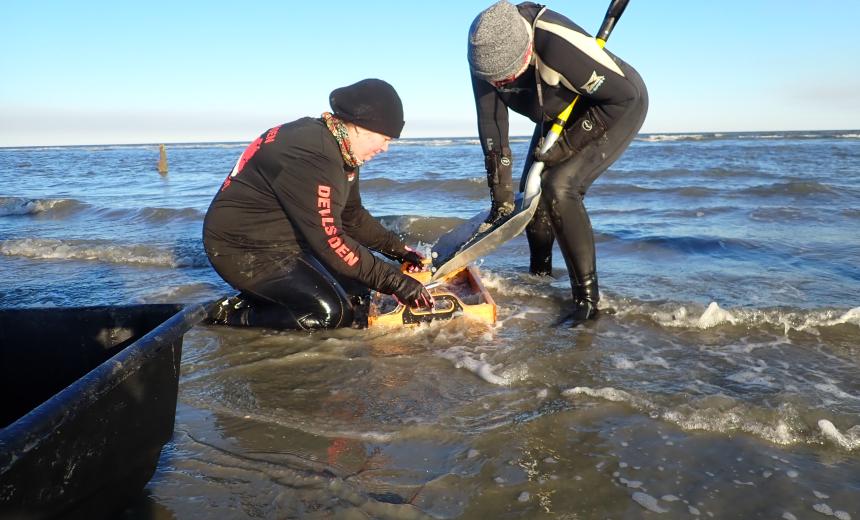
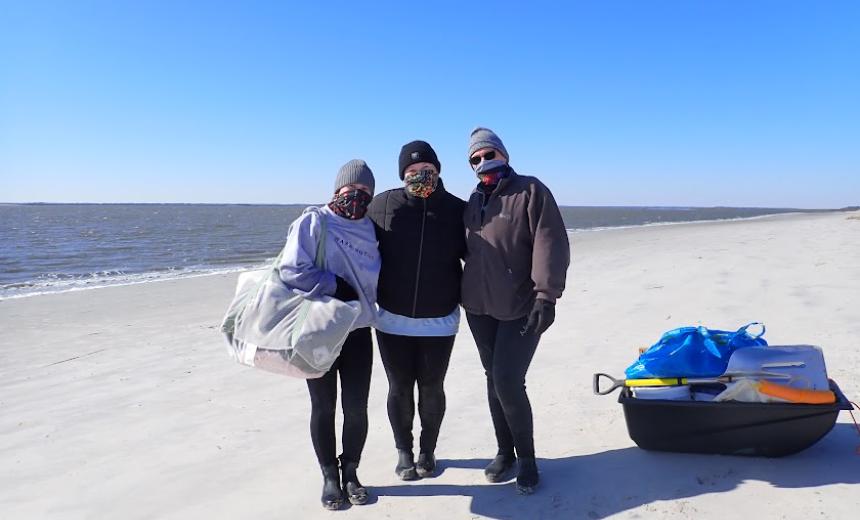
A research group from Dr. Kristine White’s marine invertebrate lab recently traveled to Sapelo Island to conduct seasonal field work on coastal crustaceans and the intertidal ecosystems. The trip provided Georgia College students with hands-on experience, while also supporting the ongoing studies of marine biodiversity and environmental monitoring. Located off the coast of Georgia, Sapelo Island is home to The University of Georgia Marine Institute, which provides researchers access to coastal environments and high quality facilities.
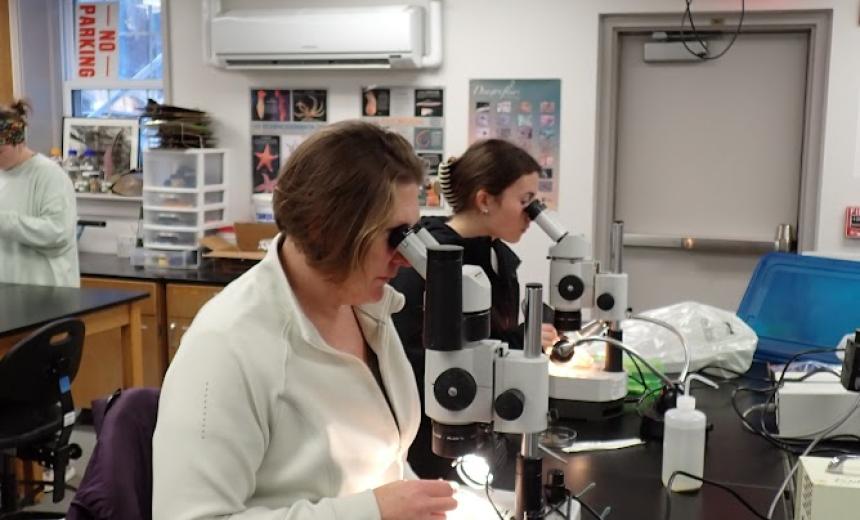
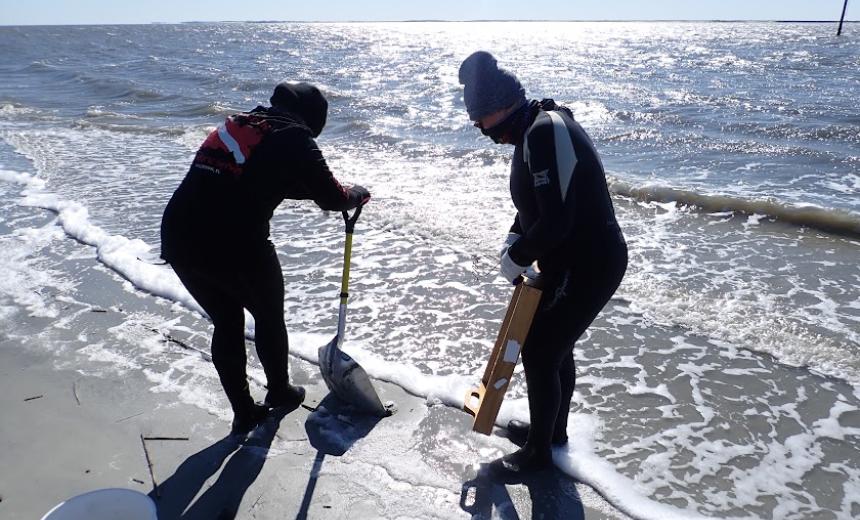
The team's main focus was on collecting intertidal amphipods. These small crustaceans play a key role in marine food webs and serve as bioindicators, meaning their presence can reflect environmental conditions. Kali Holierhoek, a student researcher in Dr. White’s lab was studying amphipod diversity and distribution as a part of her thesis. “Amphipods are a super important species,” she said. “A lot of organisms rely heavily on them for food, and they can indicate changes in the environment.” Dr. White explained that tracking species distribution can reveal much broader ecological shifts. “If we can identify all the species and monitor changes in their abundance, it can indicate that something bigger is happening in the ecosystem,” she said. Researchers conducted sampling during spring low tides, using transect methods to shovel and sift measured sections of sand in the intertidal zone. The team also collected subtidal crustaceans using a beam trawl for later lab and molecular analysis.
Elise Mirabella, a student on the trip, is continuing research she began for her past thesis project. Last year, she used a beam trawl to collect subtidal crustaceans from protected and exposed beaches to study seasonal changes in their distribution. The trip provided students with applied training in species identification, field sampling, and experimental design while contributing to conservation knowledge. “If we want to work on conservation, we need to know who is there and their role in the environment,” Kali said. Dr. White emphasized the value of field experience by stating, “Seeing where organisms live and how they interact tells you more than you could ever learn sitting in a lab.” The Sapelo Island trip is part of the lab’s ongoing seasonal research efforts aimed at understanding coastal ecosystems and preparing students for future work in marine and environmental science.