Department Updates
Georgia College, Georgia Tech partner to create dual-degree pathway for aspiring engineers
Student Updates
APS Global Physics Summit
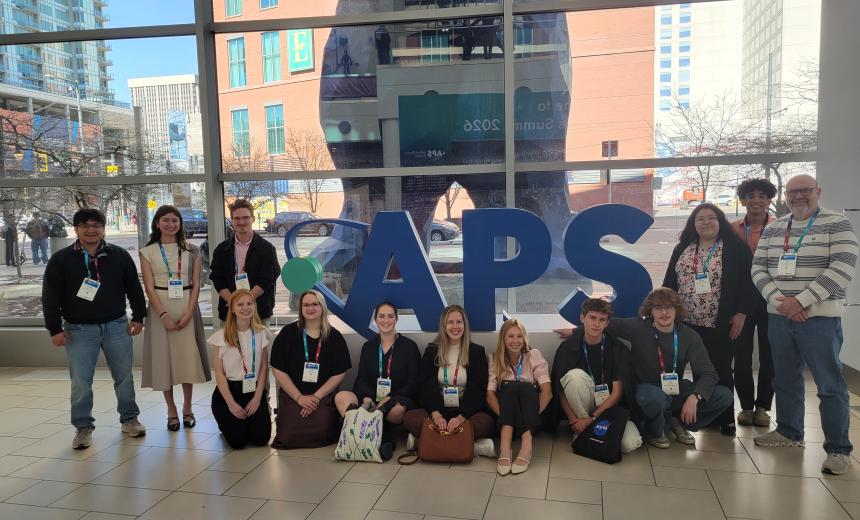
The 2026 Joint March Meeting and April Meeting, now called the APS Global Physics Summit, is a scientific research conference that brings together more than 14,000 physicists from around the world to showcase their work, connect with others, and discover groundbreaking physics research. Dr McGill was able to take his entire research group to the meeting. His research group has both Chemistry and Physics majors.
Carlos Lopez-Blackwell, Senior Chemistry major, writes, “Attending the APS Conference in Denver has been an incredibly valuable experience. I initially expected the material to be outside my primary discipline, the sessions were highly accessible and engaging I attended technically rigorous seminars on polymer physics that complemented my chemistry background and expanded my interdisciplinary understanding. It was particularly rewarding to see peers from my institution present their research, reflecting the strong academic preparation and collaborative environment fostered at our university. Beyond the academic sessions, the conference provided opportunities for professional growth and connection. The experience has been rewarding so far!”
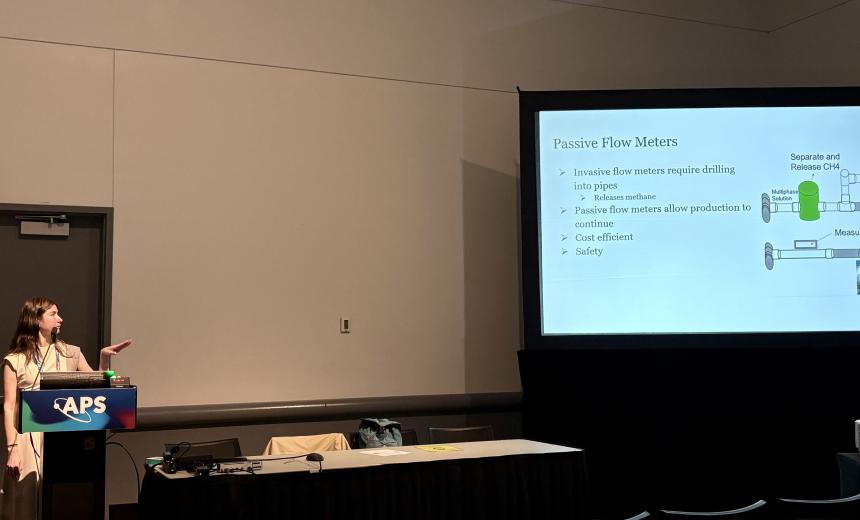
Isabella Lopez, Senior Physics major writes, “I was incredibly lucky to present both an oral and poster presentation, on the array at GCSU and on my REU for LUX-Zeplin over the summer. The APS Global Summit meeting has been transformative for me, as I’ve gotten the chance to talk with a lot of scientists and national laboratories. My favorite part has been seeing people who I've worked with and getting to share my passion for research. As the conference continues, I cannot wait to see other presentations on dark matter and particle physics. The entire experience has invigorated me with a sense of purpose and a drive to keep attending conferences like this.”
Sanford Underground Research Facility (SURF) REU program 2025
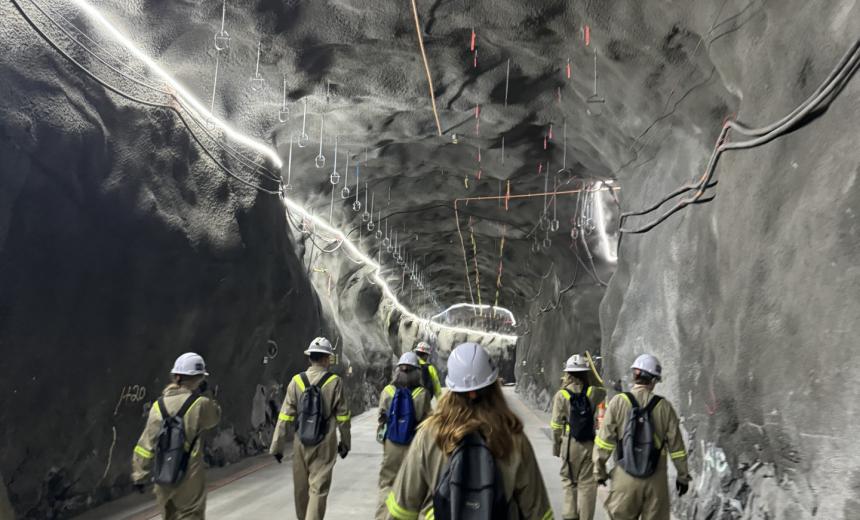
I hope you're having a great summer so far. I wanted to reach out and give you some updates on the REU program I am at! I've been at the Sanford Underground Research Facility (SURF) in South Dakota for a few weeks now, and I'm starting to work on SNEWS (SuperNova Early Warning System), which is essentially detecting neutrinos from Supernovas, and using this allows observatories to turn towards where the supernovas quickly to see them. I'm going to be working on the trigger system for it at SURF. So far, I haven't been able to really start a ton on that, but I have gotten to move 3 HPGe's (high-purity Germanium detector), so I've been lifting a lot of lead. I am also learning a lot more about the LZ detector here, and how it works. I'm attaching a few pictures of some of what I've seen so far (drifts, lead, LZ detector and the other REU students). I'm super excited for the rest of the REU! I can't wait to come back and do more research as well.
Kind regards,
Isabella Lopez